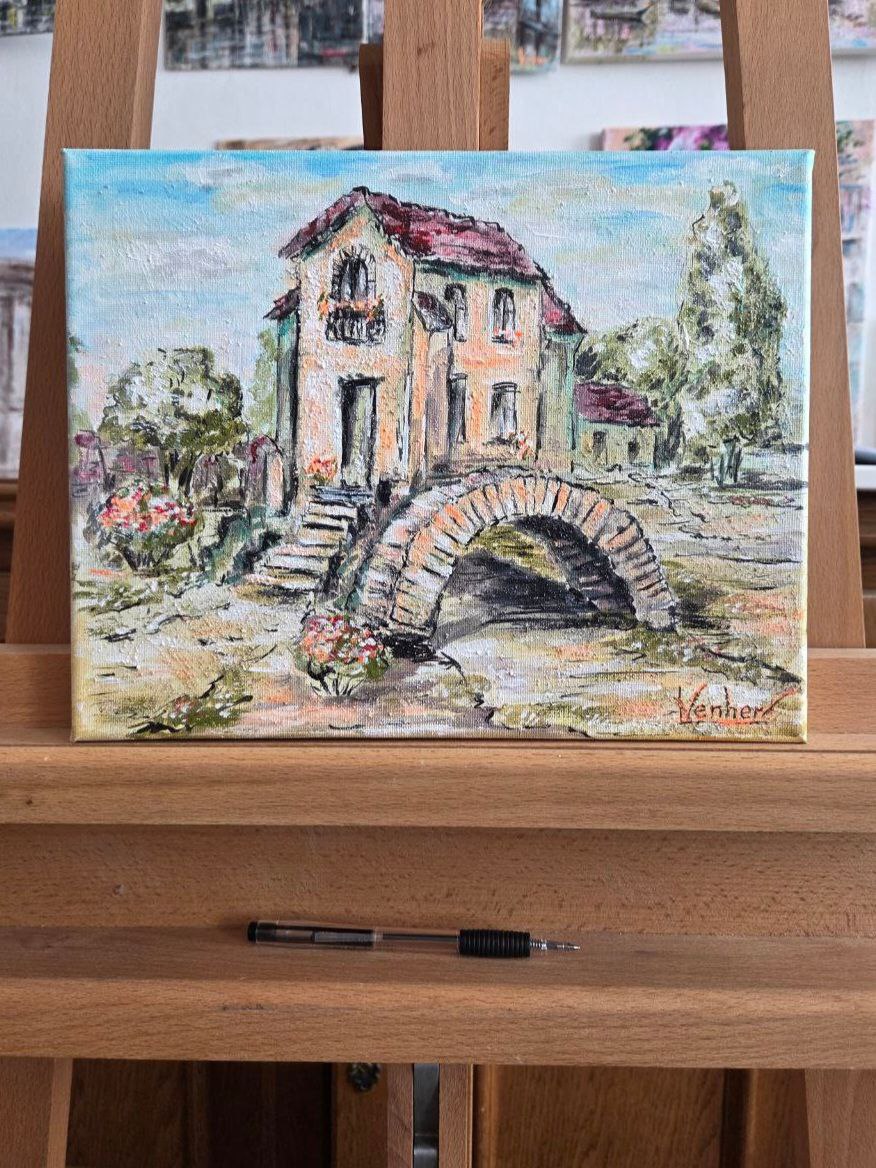




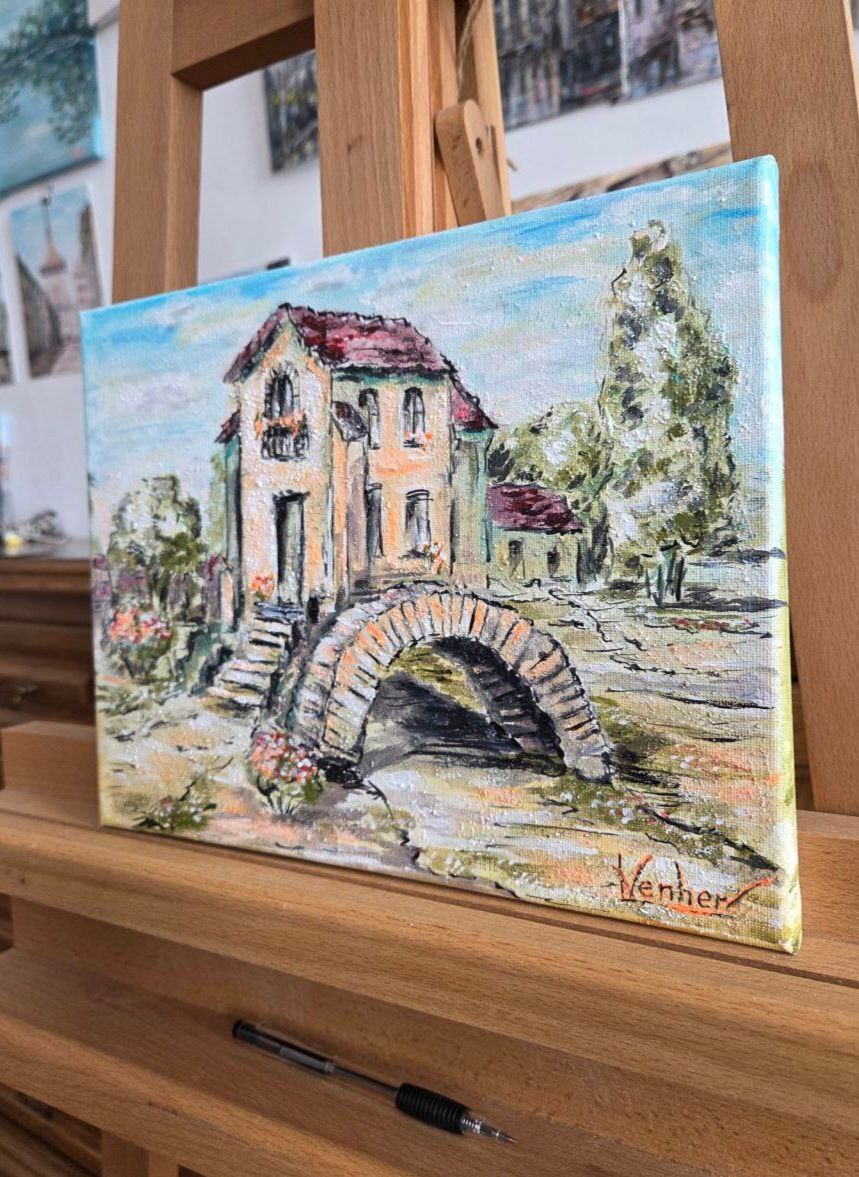
A quiet summer day. In the courtyard, bathed in soft sunlight, flowers are blooming profusely—lush rose bushes, fragrant phlox, and modest daisies. Everything around lives and breathes warmth: green trees frame the space, their crowns rustling in the wind, casting picturesque shadows on the ground.
In the midst of this vibrant, almost heavenly corner, a stone arch suddenly appears—like a fragment of the past, jutting from the earth. Overgrown with moss and cracks, it rises alone among the vegetation, a silent witness to times long gone. Once, it may have been part of a majestic building—a temple, an estate, or a castle.
Now, the arch is a monument to time, a contrast between the eternity of stone and the fleetingness of summer, between former grandeur and present peace. It’s neither frightening nor oppressive—on the contrary, it lends the scene a special depth, reminding us that even amidst the everyday beauty of nature, history lives on.
If you’d like, I can adapt the description to a more poetic or historical style.